
AM and PM Explained
How does the 12-hour clock system work? Is midnight 12 am or 12 pm?
The first day of Sukkot (Succot, Succoth, Sukkoth) is the start of the Feast of Tabernacles period. The festival starts on 15th day of Tishri (or Tishrei) in the Jewish calendar. Many Jewish people around the world visit Jerusalem around this time.
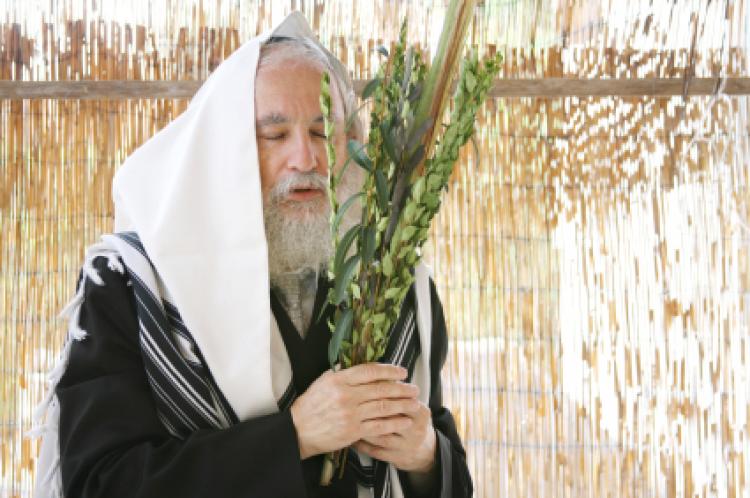
Sukkot is celebrated among many Jewish people worldwide.
©iStockphoto.com/Tova Teitelbaum
The first day of Sukkot is a day when many people of Jewish faith do not carry out many forms of work. Many people celebrate the first two days as full holidays. This is because it is a sacred occasion that is observed like Shabbat (the Sabbath). Work is permitted on the remaining days of Sukkot.
Many Jewish families build a temporary structure known as the sukkah, usually in a garden or on a balcony, prior to the first day of Sukkot. Some people spend some or all of Sukkot in the sukkah and may even sleep in it, although this is less likely in cooler climates. Some people construct a sukkah each year, while others have a foldable one, which is stored carefully for future years.
The "four species" (four plants with symbolic meanings) are waved in proscribed directions after a blessing is recited during Sukkot, except on Shabbat (the Sabbath). People may do this at a synagogue, in the sukkah or at home.
The first day of Sukkot is a public holiday in Israel. It is not a nationwide public holiday in countries such as Australia, Canada, the United Kingdom or the United States. However, many Jewish businesses, schools and organizations may be closed or offer a reduced level of service.
In the time of the Temple, many Jewish people made a pilgrimage (Hakhel) to the Temple in Jerusalem at Sukkot once every seven years. There they would listen to readings from the Torah by the king of Israel. This custom stopped after the destruction of the Temple in the year 70 CE, but has been revived in recent times. Some sources claim that Sukkot lasts for about seven days while others state that it is an eight-day festival. The seventh day of Sukkot is known as Hoshana Rabbah while the eighth day is known as Shemini (or Shmini) Atzeret and the day after that is called Simhat (or Simchat) Torah.
An important Sukkot symbol is the sukkah. This is a temporary structure with a roof made of sechach or s'chach, which is raw, unfinished plant material, such as palm branches, bamboo poles, reeds or even corn stalks. Most or all of its roof should be directly under the sky and the inside may be decorated with extracts from the Torah, real or imitation fruit and shiny decorations. Portable sukkahs are available for travelers.
The “four species” are also important symbols of Sukkot and represent the blessings of nature. These are lulav (a green, closed frond of a date palm tree), hadass (twigs and leaves from a myrtle tree), aravah (twigs and leaves from a willow tree) and etrog (a lemon-like fruit of the citron tree).
In the Jewish diaspora—Jewish communities outside of Israel—an extra day is usually added to religious observances, with the exception of Yom Kippur, which lasts only one day worldwide, and Rosh Hashana, which is celebrated over two days in both Israel and the diaspora.
This custom has its roots in ancient times when the beginning of the months in the Jewish calendar still relied on the sighting of the crescent Moon following a New Moon.
The beginning of a new month was determined by the Sanhedrin, the supreme court of ancient Israel in Jerusalem. Once the date was published, messengers were dispatched to spread the news among Jews living abroad. Since this process took some time, it was decreed that Jews outside of ancient Israel were to observe every holiday for 2 days to make sure that the rules and customs applicable to each holiday were observed on the proper date. This rule is still observed today.
How does the 12-hour clock system work? Is midnight 12 am or 12 pm?

Why do many countries set the clocks back and forth an hour twice a year?

Why are there 12 months? How long are they, and what do the month names mean?
Coordinated Universal Time (UTC) is the basis for civil time today. This 24-hour time standard is kept using highly precise atomic clocks combined with the Earth's rotation.