June Is the Sixth Month of the Year
June is a summer month in the northern half of the world, and a winter month in the southern half. It is named after Juno, the goddess of youth.
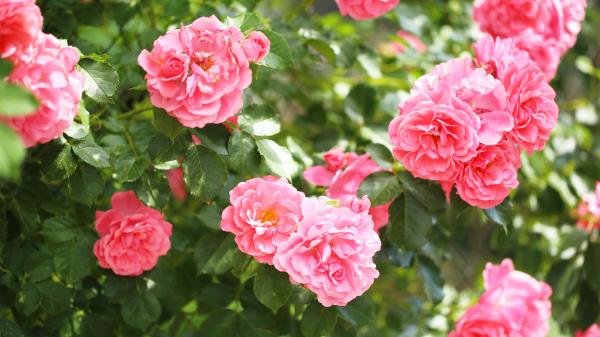
June’s birth flower is the rose.
©bigstockphoto.com/Yastremska
June is the sixth month in the Gregorian calendar and has 30 days. It is the first month of astronomical summer in the Northern Hemisphere and astronomical winter in the Southern Hemisphere.
What Is the Meaning of June?
June is named after Juno, the Roman goddess of youth and protection. Her name (Latin Iūnō) comes from the root word for “young” (Iuuen) and goes back to the idea of vital energy and fertility.
Another etymology for the origin of June explains the month’s name with the Latin word for youth: June was dedicated to Iuventas, the young, while May was for the Maiores, the elders. Both explanations work equally well, as Juno is the goddess of youth.
The June Solstice
The June solstice or Summer Solstice is the longest day of the year in the Northern Hemisphere. It marks the first day of astronomical summer. The date varies between June 20, 21, and 22.
In the Southern Hemisphere, the June solstice is the first day of astronomical winter since it is the shortest day of the year there. The word solstice means “sun-stopping” (from the Latin solstitium) because the Sun seems to be standing still in the sky.
When Is Midsummer?
Midsummer means the middle of summer. It is celebrated either on the summer solstice (June 20, 21, or 22) or St John’s Day on June 24. Midsummer is mainly celebrated in Norway, Sweden, Denmark, and Finland (the Nordic countries), and Estonia, Latvia, and Lithuania (the Baltic countries).
In Scandinavia, Midsummer is also called Midsommar or Sankt Hans after the Christian martyr Saint John the Baptist. The Christian Church celebrates his day on June 24, exactly six months before Christmas. St John is said to “prepare the way for Christ,” as the sunlight decreases after Midsummer and increases after Christmas.

On Midsummer’s Eve, Norwegians celebrate Sankthansaften (Sankt Hans’ Eve) with bonfires along the Fjords.
©iStockphoto.com/TasfotoNL
What Is June 19th?
Juneteenth is a federal holiday in the United States on June 19. The name comes from the date: June nineteenth became June-teenth. On June 19, 1865, all remaining slaves in Texas were freed by Union soldiers. The day is also known as Emancipation Day and celebrates freedom and equal rights.
When Is Father’s Day In June?
Father’s Day is celebrated around the world on different dates. In Canada, the United Kingdom, and the United States, it falls on the third Sunday of June. In Thailand, for example, it is celebrated on December 5—the birthday of the late King Bhumibol of Thailand.
Night sky: Astronomical events in June
History of June
In the old Roman calendar, June was called mens iunius and had 29 days. The Roman year started in March, and Iunius was the fourth month. In the year 154 BCE, a rebellion forced the Roman senate to change the beginning of the civil year from March to January 1. With this reform, June officially became the sixth month in the year 153 BCE.
In the year 46 BCE, Julius Caesar introduced a new calendar system—the Julian calendar. He added ten days to the year and introduced the leap day. In the new Julian calendar, June was expanded to 30 days.

This Roman wall calendar dating from 84-55 BCE shows “IUN” as the sixth month.
Photograph by Bauglir / CC BY-SA 4.0
June Birthstone and Birth Flowers
According to tradition, the birthstones for June are pearl, alexandrite, and moonstone, all representing health and longevity. The June birth flowers are the rose (Rosa) and the honeysuckle (Lonicera caprifolium).