AM and PM Explained
How does the 12-hour clock system work? Is midnight 12 am or 12 pm?
Many Jewish communities around the world observe Lag B’Omer, also known as Lag BaOmer, on the 18th day of the month of Iyar in the Jewish calendar. The name of this observance refers to the 33rd day of the counting of the Omer.
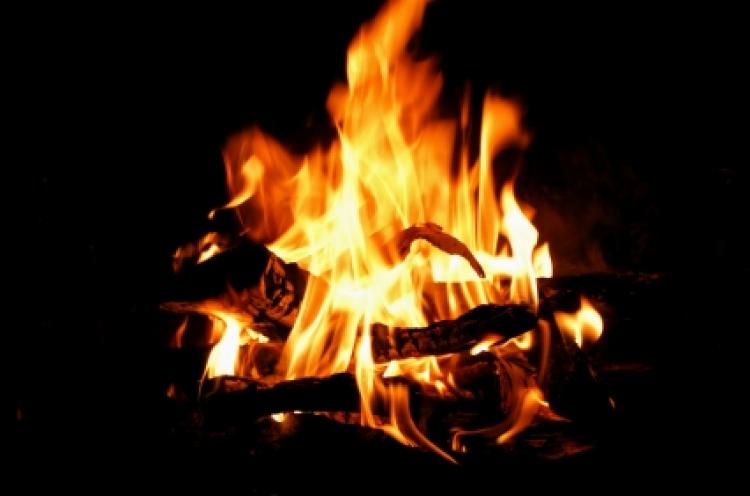
Many Jewish communities light bonfires on Lag B'Omer.
©iStockphoto.com/Greg Nicholas
The Counting of the Omer is a time for spiritual growth and some Jewish groups forbid haircuts, weddings, dancing and other forms of entertainment in this period. However, Lag B'Omer is a time of celebration and these restrictions are either lifted for one day or ended. Many people hold picnics or barbecues, sing, dance, and encourage their children to play outside with bows, arrows, bats and balls. In Meron, Israel, three-year-old boys are given their first haircuts on this holiday.
On the evening at the start of Lag B'Omer, children and young people light bonfires that they prepared in the days leading up to the holiday. People may also offer Chai Rotel by donating or offering 18 rotel (about 13 gallons or 54 liters) of liquid food or drink to pilgrims attending the celebrations at the Hilula of R'Shimon bar Yochai in Meron, Israel. Many people believe that anyone who does this will be granted a miracle. An example of this would be that a woman who cannot have children through pregnancy may miraculously become pregnant.
Lag B'Omer is not a public holiday in Israel, but schools close for the day. It is also not a public holiday in countries such as Australia, Canada, the United Kingdom, or the United States. However, Jewish organizations may be closed or offer a limited service to allow celebrations to be held.
The Lag B'Omer holiday originates from the time of Rabbi Akiva, a scholar and teacher of Jewish law who lived approximately during the years 50 to 135. In a number of Jewish documents, there are passages, which report that 24,000 of his students died in a plague, because they had not respected each other. The plague ended on the 33rd day of the Counting of the Omer, a period of 49 days between the Jewish holidays of Passover and Shavuot.
Some scholars think that the "plague" refers to the Roman occupation of Jewish lands and that the students died resisting the Roman army, perhaps in the Bar Kokhba revolt in the years 132 to 135. Lag B’Omer is also known as Lag BaOmer or Lag LaOmer.
In Israel, Lag B'Omer is a school holiday. In the days beforehand, children and young people gather waste wood, particularly old doors and boards, to pile into huge bonfires. On the evening of Lag B'Omer, these fires are lit. As some scholars think that the "plague" that caused the deaths of Rabbi Akiva's students was actually the Bar Kokhba revolt during the Roman occupation, the bonfires may symbolize fires lit to communicate and celebrate that a war or period of fighting has ended.
Note: Many Jewish holidays begin at sundown the day before the date specified for the holiday.
In the Jewish diaspora—Jewish communities outside of Israel—an extra day is usually added to religious observances, with the exception of Yom Kippur, which lasts only one day worldwide, and Rosh Hashana, which is celebrated over two days in both Israel and the diaspora.
This custom has its roots in ancient times when the beginning of the months in the Jewish calendar still relied on the sighting of the crescent Moon following a New Moon.
The beginning of a new month was determined by the Sanhedrin, the supreme court of ancient Israel in Jerusalem. Once the date was published, messengers were dispatched to spread the news among Jews living abroad. Since this process took some time, it was decreed that Jews outside of ancient Israel were to observe every holiday for 2 days to make sure that the rules and customs applicable to each holiday were observed on the proper date. This rule is still observed today.
How does the 12-hour clock system work? Is midnight 12 am or 12 pm?
Why do many countries set the clocks back and forth an hour twice a year?

Why are there 12 months? How long are they, and what do the month names mean?
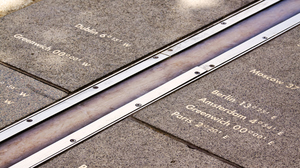
Coordinated Universal Time (UTC) is the basis for civil time today. This 24-hour time standard is kept using highly precise atomic clocks combined with the Earth's rotation.