AM and PM Explained
How does the 12-hour clock system work? Is midnight 12 am or 12 pm?
The Orthodox New Year, also known as the Old New Year, according to the Julian calendar is on January 14 in the Gregorian calendar. The Julian calendar pre-dates the Gregorian calendar.
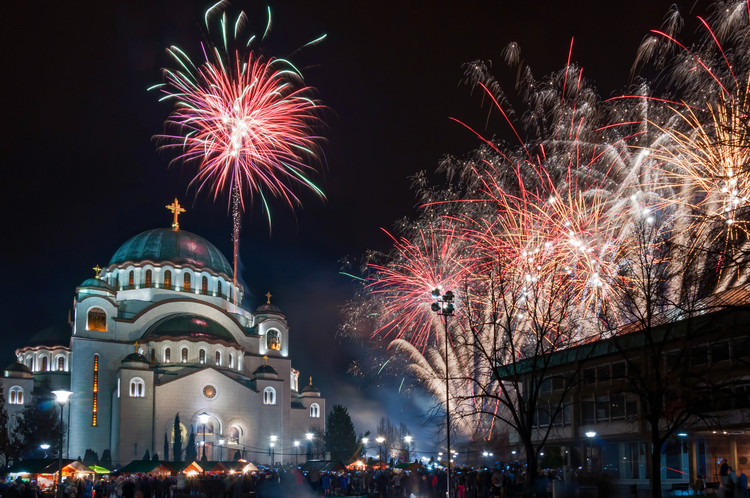
Fireworks are part of celebrating the Orthodox New Year.
©iStockphoto.com/ANRiPhoto
Many Orthodox Christians who observe the New Year’s Day date from the Julian calendar may spend the day reflecting on the previous year and think about meaningful resolutions for the New Year. Many people celebrate the day with family or friends to welcome the New Year. Activities may include fireworks, large meals and music entertainment.
Some churches hold Orthodox New Year events such as parties or dinners. Those who attend these events may pray for the New Year and toast their drinks. Some churches host gala dinners to raise funds for charitable causes or church building restorations.
The Orthodox New Year is not a federal public holiday but it may be a regional or non-official holiday limited to regional areas or religious groups in countries such as Bosnia and Herzegovina, Georgia, Russia, and the Ukraine. The Orthodox New Year is observed among Orthodox Christians in countries such as Australia, Canada, the United Kingdom and the United States.
The Orthodox New Year is widely known as the Old New Year. It is marked as January 1 in the Julian calendar, which was used before the Gregorian calendar. Some countries, including Italy, Poland, Portugal, and Spain, accepted the Gregorian calendar’s introduction in 1582.
The conversion took longer for other countries such as Great Britain (1752) and Greece (1923). A number of days were omitted when the Gregorian calendar was introduced. For example, England and Scotland dropped 11 days for the conversion. Some communities did not accept the loss of these days and preferred to use the Julian calendar.
Many Orthodox churches still recognize the holiday dates according to the Julian calendar. The Orthodox New Year does not remain static in the Gregorian calendar because there are shifts between the Julian and Gregorian calendars over time. For example, the Old New Year falls on January 14 between 1901 and 2100 but it will move again in time if the Julian calendar is still used.
The Julian calendar was revised in 1923 and this version is more in line with the Gregorian calendar. Some Orthodox churches follow the revised Julian calendar but many Orthodox churches still follow the more traditional Julian calendar, which has the original dates for Christian observances prior to the Gregorian calendar’s introduction. Also, the Orthodox New Year must not be confused with the start of the Eastern Orthodox liturgical calendar, which traditionally begins on September 1.
The Orthodox New Year has been symbolized or mentioned in various Eastern European art, including Russian art and literary works. For example, a comedy drama called The Old New Year, written by playwright Mikhail Roshchin in 1973, was featured in theatres before it became a screenplay for television film.
How does the 12-hour clock system work? Is midnight 12 am or 12 pm?

Why do many countries set the clocks back and forth an hour twice a year?

Why are there 12 months? How long are they, and what do the month names mean?
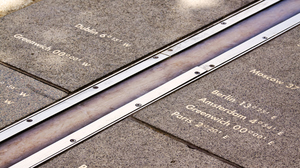
Coordinated Universal Time (UTC) is the basis for civil time today. This 24-hour time standard is kept using highly precise atomic clocks combined with the Earth's rotation.