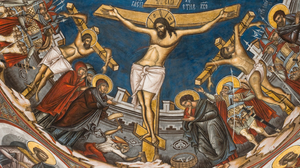
Orthodox Good Friday
Many Orthodox Christians in Australia remember the events leading up to Jesus Christ's crucifixion on Great Friday.

Many Orthodox Christians in Australia celebrate Jesus Christ’s resurrection on Easter Sunday. The Orthodox date for Easter Sunday is later than the Easter date observed by non-orthodox Christians.
Orthodox Easter is not a public holiday. It falls on Sunday, May 5, 2024 and most businesses follow regular Sunday opening hours in Australia.
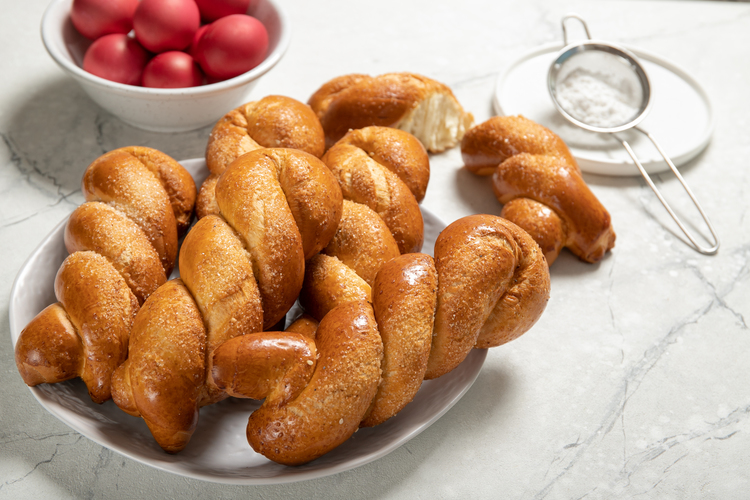
Tsoureki, a type of Easter bread, and red dyed eggs are common for Orthodox Easter in Australia.
©iStockphoto.com/Inna Mykhalchuk
Orthodox Christians celebrate Easter Day, also called Pascha, as well as the Sunday of the Resurrection, according to the Easter date in the old Julian calendar, which is differnet from the Easter dates in the Gregorian calendar.
Easter is the most important event in the church calendar. The Easter Sunday church liturgies are joyous as they celebrate Jesus Christ’s resurrection, according to Christian belief, as well as spiritual victory.
Many Orthodox Christians in Australia fast during Lent prior to Easter. Easter Sunday is a time for families and friends to get together for a festive meal, where meat and dairy products can be eaten again. Lamb and tsourekia (or tsoureki), which is a type of Easter bread, are popular Easter dishes in many Orthodox communities in Australia.
Traditional Easter egg games are also popular. Each person takes a dyed red egg and tries to crack other challengers’ eggs. This game symbolizes Jesus Christ breaking from his tomb. The person whose egg lasts the longest is assured good luck for the rest of the year. Some people bring dyed Easter eggs to church to be blessed at the Easter liturgy.
In some cities, you will find egg painting workshops for pysanky a special decorated Easter egg customary in some eastern European countries, such as Ukraine.
The Orthodox Christian date for Easter Sunday is not a federal public holiday in Australia. However, it is held on a Sunday, which is a non-school day and non-working day for most Australians. Sunday trading hours still apply in areas where there is Sunday trading, particularly in major cities.
The Easter egg is hard-boiled and dyed red to symbolize the blood of Christ. It was an important symbol connected with spring fertility rituals in many early civilizations. Many Orthodox Christians rap their eggs against their friends' eggs and the owner of the last uncracked egg is considered lucky.
The Orthodox custom of decorating the round Easter bread with red eggs at the four edges of the cross on the bread dates back to around the 12th century. Another important symbol associated with Easter is the lamb. It is often depicted with a banner that bears a cross, and it is known as the Agnus Dei, meaning "Lamb of God" in Latin.
| Year | Weekday | Date | Name | Holiday Type |
|---|---|---|---|---|
| 2019 | Sun | Apr 28 | Orthodox Easter | Orthodox |
| 2020 | Sun | Apr 19 | Orthodox Easter | Orthodox |
| 2021 | Sun | May 2 | Orthodox Easter | Orthodox |
| 2022 | Sun | Apr 24 | Orthodox Easter | Orthodox |
| 2023 | Sun | Apr 16 | Orthodox Easter | Orthodox |
| 2024 | Sun | May 5 | Orthodox Easter | Orthodox |
| 2025 | Sun | Apr 20 | Orthodox Easter | Orthodox |
| 2026 | Sun | Apr 12 | Orthodox Easter | Orthodox |
| 2027 | Sun | May 2 | Orthodox Easter | Orthodox |
| 2028 | Sun | Apr 16 | Orthodox Easter | Orthodox |
| 2029 | Sun | Apr 8 | Orthodox Easter | Orthodox |
While we diligently research and update our holiday dates, some of the information in the table above may be preliminary. If you find an error, please let us know.
Many Orthodox Christians in Australia remember the events leading up to Jesus Christ's crucifixion on Great Friday.
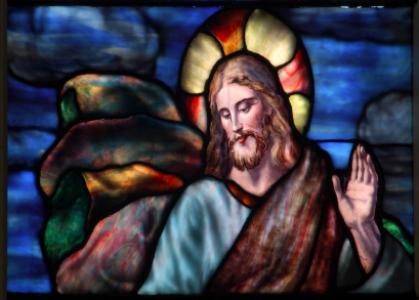
Many Orthodox Christians in Australia remember Jesus Christ’s burial and his descent into Hades on Holy Saturday.
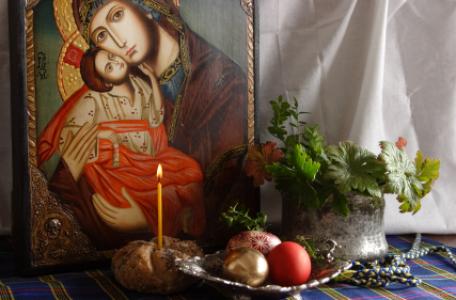
Many Orthodox churches in Australia observe Easter Monday on the day after the Orthodox Easter Sunday date.
The last day of Passover marks the end of the Passover period, which lasts for seven or eight days.