AM and PM Explained
How does the 12-hour clock system work? Is midnight 12 am or 12 pm?
Purim is a Jewish observance on the 14th day of the month of Adar in the Jewish calendar, which is in February or March in the Gregorian calendar. It commemorates a time when Jewish people were saved from death in the Persian empire around the fourth century BCE, according to the Book of Esther.
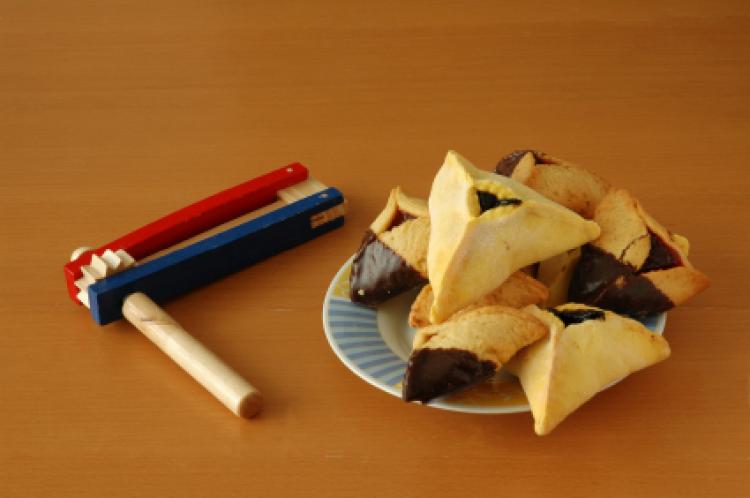
People give food to those in need as part of their duties during Purim.
©iStockphoto.com/Howard Sandler
Many Jewish communities start the celebrations around sunset on the 13th day of Adar, while others observe Purim on the 15th day of Adar. Four common activities on Purim are:
Each pronunciation of the name of Haman is drowned out by the noise of wooden rattles or other instruments that make loud noises during the reading of the Megilla. The services in the synagogue have a festive nature and often include elements, which would be unacceptable at other times of the year. Some people fast for one or more days before or after Purim.
People often give lavishly wrapped baskets of food to friends and money or food to those in need or charitable organizations. The main beverage is wine and people may drink large amounts during the festive meal. Public parades and puppet show performances illustrating the Book of Esther are held in Israel. These are also held in some areas in the United States with a large Jewish population.
Purim is a public holiday in Israel but not in Australia, Canada, the United Kingdom or the United States. Non-Jewish schools, stores, businesses and organizations are open as usual and public transit systems operate to their regular schedule. Jewish organizations may be closed.
There may be some congestion around synagogues, as people gather to hear the reading of the Megilla, and some local disruption to traffic in areas, such as Queens in New York, where Purim parades are held.
The Book of Esther, or the Megilla, is a book of the Old Testament and the Tanakh. It is read aloud on Purim and tells the story of Esther, a Jewish Queen of Persia. She was married to the king of Persia, who was unaware of her religious background. Sometime around the year 357 BCE, the prime minister of Persia, Haman, and his wife plotted to kill all Jewish people in the Persian Empire.
Esther heard of this plan and warned the king, risking her own safety. Haman and his sons were executed and the Jews were ordered to defend themselves against those who threatened them. This resulted in bloody battles, in which many people were killed. Purim celebrates the end of these battles.
Purim is celebrated at around sunset on the 13th day of the month of Adar in many parts of the world. However, in cities that were surrounded by a wall at the time of Joshua (around 1200 BCE), such as Jerusalem, the festival is celebrated on the 15th day of the month of Adar and is known as Shushan Purim. In common with all Jewish days, Purim begins at sunset on the secular day before the festival.
Graggers (wooden noisemakers) are symbolic of Purim. Graggers are often made of wood and consist of a handle fixed to a cogged wheel. The cogs on the wheel taps a thin piece of wood fixed to the handle, when the gragger is spun around. Graggers are used to block out the name of Haman, or the "name of evil", during the reading of the Megilla, also known as The Book of Esther, on Purim. However, anything that makes a loud noise can be used and in some services people stamp their feet loudly instead.
Other Purim symbols include gift-wrapped food and snacks for friends and/or the poor, as well as puppets used to act out the story of Esther for children. Many people eat filled triangular cookies known as Hamentaschen, also referred to as Hamantaschen, Hamantasch or Osnei Haman.
In the Jewish diaspora—Jewish communities outside of Israel—an extra day is usually added to religious observances, with the exception of Yom Kippur, which lasts only one day worldwide, and Rosh Hashana, which is celebrated over two days in both Israel and the diaspora.
This custom has its roots in ancient times when the beginning of the months in the Jewish calendar still relied on the sighting of the crescent Moon following a New Moon.
The beginning of a new month was determined by the Sanhedrin, the supreme court of ancient Israel in Jerusalem. Once the date was published, messengers were dispatched to spread the news among Jews living abroad. Since this process took some time, it was decreed that Jews outside of ancient Israel were to observe every holiday for 2 days to make sure that the rules and customs applicable to each holiday were observed on the proper date. This rule is still observed today.
How does the 12-hour clock system work? Is midnight 12 am or 12 pm?

Why do many countries set the clocks back and forth an hour twice a year?

Why are there 12 months? How long are they, and what do the month names mean?
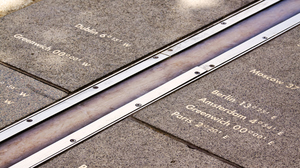
Coordinated Universal Time (UTC) is the basis for civil time today. This 24-hour time standard is kept using highly precise atomic clocks combined with the Earth's rotation.