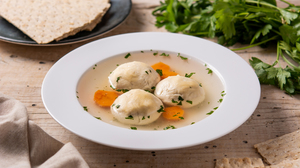
Last day of Passover
On the 8th and last day of Passover, Jews in the UK commemorate the Parting of the Red Sea and the Israelites' escape from Egypt.

Burns Night is annually celebrated in Scotland on or around January 25. It commemorates the life of the bard (poet) Robert Burns, who was born on January 25, 1759. The day also celebrates Burns' contribution to Scottish culture. His best known work is Auld Lang Syne.
Burns Night is not a public holiday. It falls on Saturday, January 25, 2025 and most businesses follow regular Saturday opening hours in United Kingdom.
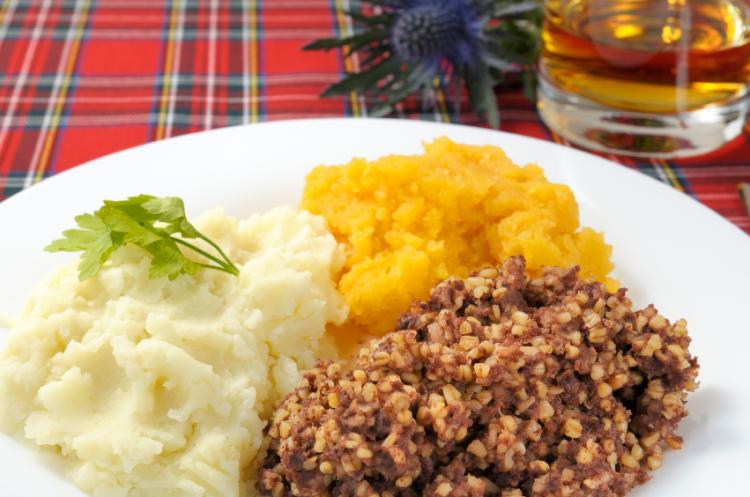
Haggis, neeps and tatties traditionally eaten in Scotland on Burns Night.
©iStockphoto.com/StockCube
Many people and organizations hold a Burns supper on or around Burns Night. These may be informal or formal, only for men, only for women, or for both genders. Formal events include toasts and readings of pieces written by Robert Burns. Ceremonies during a Burns Night supper vary according to the group organizing the event and the location.
The evening centers on the entrance of the haggis (a type of sausage prepared in a sheep's stomach) on a large platter to the sound of a piper playing bagpipes. When the haggis is on the table, the host reads the "Address to a Haggis". This is an ode that Robert Burns wrote to the Scottish dish. At the end of the reading, the haggis is ceremonially sliced into two pieces and the meal begins.
Burns Night is an observance but it is not a bank holiday in the United Kingdom.
Robert Burns was born in Alloway, Scotland, on January 25, 1759. He died in Dumfries, Scotland, on July 21, 1796. He was a bard (poet) and wrote many poems, lyrics and other pieces that addressed political and civil issues. Perhaps his best known work is "Auld Lang Syne", which is sung at New Year's Eve celebrations in Scotland, parts of the United Kingdom, and other places around the world. Burns is one of Scotland's important cultural icons and is well known among Scottish expats or descendants around the world. He is also known as: "Rabbie Burns"; the "Bard of Ayrshire"; "Scotland's favorite son"; and in Scotland "The Bard".
Robert Burns acquaintances held the first Burns supper on July 21, the anniversary of his death, in Ayrshire, Scotland, in the late 1700s. The date was later changed to January 25, which marks his birthday. Burns suppers are now held by people and organizations with Scottish origins worldwide, particularly in Australia, Canada, England, and the United States.
The Scottish flag is often displayed at Burns Night celebrations. It is known as the Saltire and consists of a rectangular blue background with thick white bars on the diagonals. The diagonals form a cross that represents Saint Andrew, the patron saint of Scotland.
At Burns Night events, many men wear kilts and women may wear shawls, skirts or dresses made from their family tartan. A tartan was originally a woolen cloth with a distinctive pattern made by using colors of weft and warp when weaving. Particular patterns and combinations of colors were associated with different areas, clans and families. Tartan patterns are now printed on various materials.
Many types of food are associated with Burns Night. These include: cock-a-leekie soup (chicken and leek soup); haggis; neeps (mashed turnips or swedes) and tatties (mashed potatoes); cranachan (whipped cream mixed with raspberries and served with sweet oat wafers); and bannocks (a kind of bread cooked on a griddle). Whisky is the traditional drink.
| Year | Weekday | Date | Name | Holiday Type | Area |
|---|---|---|---|---|---|
| 2019 | Fri | Jan 25 | Burns Night | Local Observance | Scotland |
| 2020 | Sat | Jan 25 | Burns Night | Local Observance | Scotland |
| 2021 | Mon | Jan 25 | Burns Night | Local Observance | Scotland |
| 2022 | Tue | Jan 25 | Burns Night | Local Observance | Scotland |
| 2023 | Wed | Jan 25 | Burns Night | Local Observance | Scotland |
| 2024 | Thu | Jan 25 | Burns Night | Local Observance | Scotland |
| 2025 | Sat | Jan 25 | Burns Night | Local Observance | Scotland |
| 2026 | Sun | Jan 25 | Burns Night | Local Observance | Scotland |
| 2027 | Mon | Jan 25 | Burns Night | Local Observance | Scotland |
| 2028 | Tue | Jan 25 | Burns Night | Local Observance | Scotland |
| 2029 | Thu | Jan 25 | Burns Night | Local Observance | Scotland |
While we diligently research and update our holiday dates, some of the information in the table above may be preliminary. If you find an error, please let us know.
On the 8th and last day of Passover, Jews in the UK commemorate the Parting of the Red Sea and the Israelites' escape from Egypt.
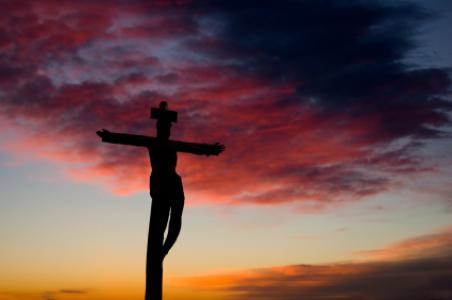
Many Orthodox Christians in the United Kingdom remember the events leading up to Jesus Christ's crucifixion on Great Friday, also known as Holy Friday.
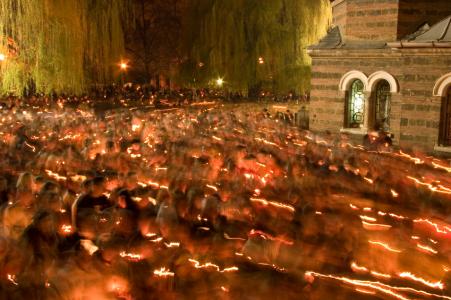
Many Orthodox Christians in the United Kingdom remember Jesus Christ’s burial and his descent into Hades on Holy Saturday.
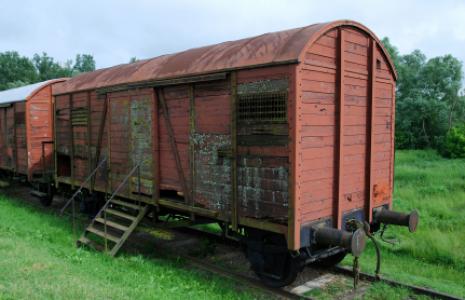
Yom Hashoah, held on the 27th day of the month of Nisan, remembers the Holocaust victims who died during World War II.