
Jul 6, 2028 at 2:19 pm
Max View in 65°06'13.9"S, 62°00'48.7"W
| Global Event: | Partial Lunar Eclipse |
|---|---|
| Local Type: | Partial Lunar Eclipse, in 65°06'13.9"S, 62°00'48.7"W |
| Begins: | Thu, Jul 6, 2028 at 1:41 pm |
| Maximum: | Thu, Jul 6, 2028 at 2:19 pm 0.389 Magnitude |
| Ends: | Thu, Jul 6, 2028 at 4:55 pm |
| Duration: | 3 hours, 14 minutes | All times shown on this page are local time. |
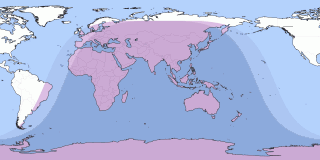

July 6, 2028 — Partial Lunar Eclipse — 65°06'13.9"S, 62°00'48.7"W
Live Eclipse Animation will start at:
Live Eclipse Animation has ended.
You are using an outdated browser, to view the animation please update or switch to a modern browser.
The animation shows what the eclipse approximately looks like. Stages and times of the eclipse are outlined below.
| Time | Phase | Event | Direction | Altitude |
|---|---|---|---|---|
| 11:44 am Thu, Jul 6 | Not directly visible | Penumbral Eclipse begins Below horizon |  185° 185° | -1.3° |
| 1:09 pm Thu, Jul 6 | Not directly visible | Partial Eclipse begins Below horizon | 166° | -0.9° |
| 1:41 pm Thu, Jul 6 | Rising | Moonrise Rising, but the combination of a very low moon and the total eclipse phase will make the moon so dim that it will be extremely difficult to view until moon gets higher in the sky or the total phase ends. | 159° | -0.2° |
| 2:19 pm Thu, Jul 6 | Maximum Eclipse Moon is closest to the center of the shadow. Moon close to horizon, recommend going to a high point. Additionally, the eclipsed moon combined with dimming near horizon might make the Moon very hard or impossible to see. | 151° | 1.1° | |
| 3:30 pm Thu, Jul 6 | Partial Eclipse ends Partial moon eclipse ends. Moon close to horizon, so make sure you have free sight to Southeast. | 136° | 5.0° | |
| 4:55 pm Thu, Jul 6 | Penumbral Eclipse ends The Earth's penumbra ends. | 118° | 11.6° |
How to use altitude & direction to find in the sky
The curvature of the shadow's path and the apparent rotation of the Moon's disk is due to the Earth's rotation.

Cloud Coverage (Jul 6)
In the past, this day was cloudy 73% of the time (since 2000).
Countdown until eclipse begins
943Days 5Hrs 9Mins 11Secs65°06'13.9"S, 62°00'48.7"W Eclipse Countdown
Lunar Eclipses
- When Is the Next Lunar Eclipse?
- Total Lunar Eclipse
- Why Does the Moon Turn Red?
- Partial Lunar Eclipse
- Penumbral Lunar Eclipse
- Can I See a Lunar Eclipse?
- Blood Moon - Total Lunar Eclipse
- Eclipse Seasons
- What Is a Tetrad?
- Magnitude of Eclipses
- Accuracy of Our Eclipse Calculations
- Why Two Dates for a Lunar Eclipse?
Eclipses and Transits Visible in 65°06'13.9"S, 62°00'48.7"W
| Eclipse Visibility From 65°06'13.9"S, 62°00'48.7"W | Visibility Worldwide | ||
|---|---|---|---|
| Feb 17, 2026 Partial Solar Eclipse | Annular Solar Eclipse | 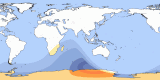 | |
| Mar 3, 2026 Penumbral Lunar Eclipse | Total Lunar Eclipse | 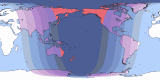 | |
| Aug 27–28, 2026 Partial Lunar Eclipse | Partial Lunar Eclipse | 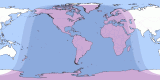 | |
| Feb 6, 2027 Partial Solar Eclipse | Annular Solar Eclipse | 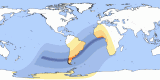 | |
| Feb 20, 2027 Penumbral Lunar Eclipse | Penumbral Lunar Eclipse | 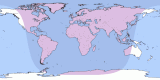 | Note: Click on the date link for details in 65°06'13.9"S, 62°00'48.7"W, or the path map image for global details. |
Next total solar eclipse visible in 65°06'13.9"S, 62°00'48.7"W
Next annular eclipse visible in 65°06'13.9"S, 62°00'48.7"W