
| Current Time: | May 20, 2024 at 6:32:58 pm |
|---|---|
| Moon Direction: | ↑ 118° Southeast |
| Moon Altitude: | 6.3° |
| Moon Distance: | 248,647 mi |
| Next Full Moon: | May 23, 2024, 2:53 pm |
| Next New Moon: | Jun 6, 2024, 1:37 pm |
| Next Moonset: | Tomorrow, 3:51 am |
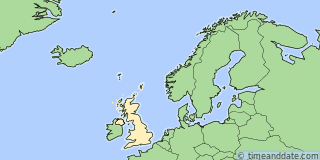

Moonrise, Moonset, and Phase Calendar for 50°49'21.8"N, 0°09'02.0"W, May 2024
Scroll right to see more
| 2024 | Moonrise/Moonset | Meridian Passing | ||||||||
|---|---|---|---|---|---|---|---|---|---|---|
| May | Moonrise | Moonset | Moonrise | Time | Distance (mi) | Illumination | ||||
 1 1 | 3:12 am | ↑ (129°) | 11:20 am | ↑ (233°) | - | 7:11 am | (15.5°) | 232,675 | 52.6% | |
| 2 | 3:35 am | ↑ (121°) | 12:47 pm | ↑ (243°) | - | 8:05 am | (20.5°) | 230,300 | 40.9% | |
| 3 | 3:52 am | ↑ (111°) | 2:15 pm | ↑ (254°) | - | 8:56 am | (26.7°) | 228,223 | 29.5% | |
| 4 | 4:07 am | ↑ (100°) | 3:42 pm | ↑ (265°) | - | 9:46 am | (33.6°) | 226,647 | 19.0% | |
| 5 | 4:20 am | ↑ (89°) | 5:09 pm | ↑ (277°) | - | 10:35 am | (40.9°) | 225,776 | 10.4% | |
| 6 | 4:34 am | ↑ (78°) | 6:38 pm | ↑ (288°) | - | 11:25 am | (48.2°) | 225,777 | 4.1% | |
| 7 | 4:50 am | ↑ (67°) | 8:08 pm | ↑ (299°) | - | 12:18 pm | (54.8°) | 226,746 | 0.7% | |
 8 8 | 5:10 am | ↑ (57°) | 9:39 pm | ↑ (308°) | - | 1:13 pm | (60.4°) | 228,667 | 0.3% | |
| 9 | 5:36 am | ↑ (49°) | 11:04 pm | ↑ (315°) | - | 2:12 pm | (64.5°) | 231,410 | 2.8% | |
| 10 | 6:13 am | ↑ (43°) | - | - | 3:11 pm | (66.8°) | 234,740 | 7.9% | ||
| 11 | - | 12:18 am | ↑ (319°) | 7:04 am | ↑ (41°) | 4:11 pm | (67.2°) | 238,355 | 15.0% | |
| 12 | - | 1:14 am | ↑ (318°) | 8:08 am | ↑ (43°) | 5:07 pm | (65.8°) | 241,936 | 23.6% | |
| 13 | - | 1:54 am | ↑ (314°) | 9:21 am | ↑ (48°) | 6:00 pm | (63.0°) | 245,193 | 33.0% | |
| 14 | - | 2:21 am | ↑ (308°) | 10:37 am | ↑ (54°) | 6:48 pm | (59.0°) | 247,893 | 42.9% | |
 15 15 | - | 2:41 am | ↑ (301°) | 11:51 am | ↑ (62°) | 7:32 pm | (54.2°) | 249,878 | 52.8% | |
| 16 | - | 2:55 am | ↑ (292°) | 1:03 pm | ↑ (71°) | 8:14 pm | (48.8°) | 251,062 | 62.5% | |
| 17 | - | 3:07 am | ↑ (284°) | 2:13 pm | ↑ (80°) | 8:53 pm | (43.2°) | 251,431 | 71.6% | |
| 18 | - | 3:18 am | ↑ (275°) | 3:21 pm | ↑ (90°) | 9:32 pm | (37.3°) | 251,030 | 79.9% | |
| 19 | - | 3:28 am | ↑ (266°) | 4:31 pm | ↑ (99°) | 10:11 pm | (31.5°) | 249,954 | 87.1% | |
| 20 | - | 3:39 am | ↑ (257°) | 5:42 pm | ↑ (108°) | 10:52 pm | (25.8°) | 248,336 | 93.0% | |
| 21 | - | 3:51 am | ↑ (248°) | 6:56 pm | ↑ (117°) | 11:36 pm | (20.6°) | 246,328 | 97.2% | |
| 22 | - | 4:06 am | ↑ (239°) | 8:13 pm | ↑ (126°) | Moon does not pass the meridian on this day. | ||||
 23 23 | - | 4:26 am | ↑ (232°) | 9:31 pm | ↑ (133°) | 12:24 am | (16.0°) | 244,089 | 99.5% | |
| 24 | - | 4:54 am | ↑ (225°) | 10:46 pm | ↑ (138°) | 1:16 am | (12.5°) | 241,764 | 99.7% | |
| 25 | - | 5:35 am | ↑ (222°) | 11:50 pm | ↑ (139°) | 2:12 am | (10.4°) | 239,476 | 97.5% | |
| 26 | - | 6:32 am | ↑ (221°) | - | 3:10 am | (10.0°) | 237,313 | 92.9% | ||
| 27 | 12:39 am | ↑ (137°) | 7:44 am | ↑ (225°) | - | 4:09 am | (11.3°) | 235,330 | 86.1% | |
| 28 | 1:15 am | ↑ (131°) | 9:07 am | ↑ (231°) | - | 5:07 am | (14.4°) | 233,552 | 77.3% | |
| 29 | 1:40 am | ↑ (123°) | 10:34 am | ↑ (240°) | - | 6:01 am | (19.1°) | 231,995 | 66.9% | |
| 30 | 1:59 am | ↑ (114°) | 12:00 pm | ↑ (250°) | - | 6:52 am | (24.8°) | 230,679 | 55.5% | |
| 31 | 2:14 am | ↑ (104°) | 1:25 pm | ↑ (261°) | - | 7:41 am | (31.4°) | 229,645 | 43.7% | |
| * All times are local time for 50°49'21.8"N, 0°09'02.0"W. Time is adjusted for DST when applicable. They take into account refraction. Dates are based on the Gregorian calendar. Illumination is calculated at lunar noon. | ||||||||||
Jan | Feb | Mar | Apr | May | Jun | Jul | Aug | Sep | Oct | Nov | Dec