12 hours, 28 minutes
Tue, May 28 at 5:54 pm – Wed, May 29 at 6:22 am
Visible night of May 28 – May 29, 2024
| Mercury: | From Wed 5:07 am |
|---|---|
| Venus: | From Wed 6:16 am |
| Mars: | From Wed 3:08 am |
| Jupiter: | From Wed 5:50 am |
| Saturn: | From Wed 12:56 am |
| Uranus: | From Wed 5:21 am |
| Neptune: | From Wed 1:39 am |


Shortest Lunar Month 2024
On average, it takes the Moon 29.53 days to cycle through all its phases. However, the lunar month starting at Third Quarter Moon on May 30 will last 29.19 days—around 8 hours and 10 minutes faster than average. Read the full story.
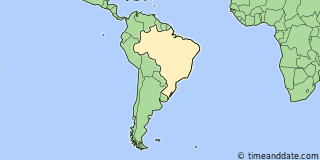
Our Interactive Night Sky Map simulates the sky above 10°55'00.6"S, 62°50'36.3"W. The Moon and planets have been enlarged slightly for clarity. On mobile devices, tap to steer the map by pointing your device at the sky. Need some help?
Tonight's Sky in 10°55'00.6"S, 62°50'36.3"W, May 28 – May 29, 2024 (6 planets visible)

Mercury rise and set in 10°55'00.6"S, 62°50'36.3"W
Fairly close to the Sun. Visible only before sunrise and/or after sunset.
Mercury is just 18 degrees from the Sun in the sky, so it is difficult to see.
Wed, May 29 ↑5:07 am
Time:
Altitude: °
Direction: °

Mars rise and set in 10°55'00.6"S, 62°50'36.3"W
View before sunrise.
Mars can best be seen in the hours just before sunrise. Visibility deteriorates as the sky gets brighter.
Wed, May 29 ↑3:08 am
Time:
Altitude: °
Direction: °

Jupiter rise and set in 10°55'00.6"S, 62°50'36.3"W
Fairly close to the Sun. Visible only before sunrise and/or after sunset.
Jupiter is just 7 degrees from the Sun in the sky, so it is difficult to see.
Wed, May 29 ↑5:50 am
Time:
Altitude: °
Direction: °

Saturn rise and set in 10°55'00.6"S, 62°50'36.3"W
View before sunrise.
Saturn can best be seen in the hours just before sunrise. Visibility deteriorates as the sky gets brighter.
Wed, May 29 ↑12:56 am
Time:
Altitude: °
Direction: °

Uranus rise and set in 10°55'00.6"S, 62°50'36.3"W
Very close to Sun, hard or impossible to see.
Uranus is just 14 degrees from the Sun in the sky, so it is difficult or impossible to see it.
Wed, May 29 ↑5:21 am
Time:
Altitude: °
Direction: °

Neptune rise and set in 10°55'00.6"S, 62°50'36.3"W
View before sunrise. Use binoculars.
Neptune can best be seen in the hours just before sunrise. Visibility deteriorates as the sky gets brighter. Very faint, use binoculars.
Wed, May 29 ↑1:39 am
Time:
Altitude: °
Direction: °
Planets Visible in 10°55'00.6"S, 62°50'36.3"W
| Planetrise/Planetset, Wed, May 29, 2024 | ||||
|---|---|---|---|---|
| Planet | Rise | Set | Meridian | Comment |
| Mercury | Wed 5:07 am | Wed 4:47 pm | Wed 10:57 am | Slightly difficult to see |
| Venus | Wed 6:16 am | Wed 5:47 pm | Wed 12:02 pm | Very close to Sun, not visible |
| Mars | Wed 3:08 am | Wed 3:00 pm | Wed 9:04 am | Average visibility |
| Jupiter | Wed 5:50 am | Wed 5:22 pm | Wed 11:36 am | Slightly difficult to see |
| Saturn | Wed 12:56 am | Wed 1:08 pm | Wed 7:02 am | Average visibility |
| Uranus | Wed 5:21 am | Wed 4:54 pm | Wed 11:07 am | Extremely difficult to see |
| Neptune | Wed 1:39 am | Wed 1:44 pm | Wed 7:42 am | Very difficult to see |