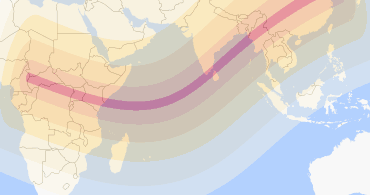
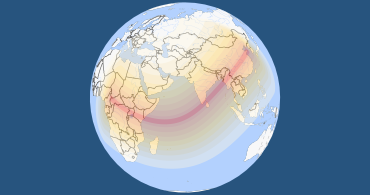
An annular solar eclipse on January 15, 2010 marks the first of four eclipses throughout the year. This eclipse is visible from a track that goes across central Africa, the Indian Ocean and eastern Asia.
The eclipse’s annular phase lasts for about 11 minutes and eight seconds, which is the longest lasting solar eclipse since the annular solar eclipse on January 4, 1992, which lasted for about 11 minutes and 41 seconds. This duration will not be equaled or exceeded until the annular solar eclipse of December 23, 3043, which is 1033 years ahead of 2010.
This eclipse wasn't visible in Columbus - Which upcoming eclipses can be seen in your location?
Where the Eclipse Was Seen
Try our new interactive eclipse maps. Zoom in and search for accurate eclipse times and visualizations for any location.
Path of the Eclipse Shadow
Regions that saw, at least, a partial eclipse: South/East Europe, Asia, Much of Africa, Pacific, Atlantic, Indian Ocean.
The eclipse's path
The maximum eclipse point occurs in the middle of the Indian Ocean, but the annular phase can still be seen from either Africa or Asia. People in the towns of Bambari and Bangasou, in the Central African Republic, can witness the annular eclipse at sunrise before it moves towards Uganda. The capital city of Kampala witnesses seven minutes and 39 seconds of annularity but the sun is only 20 degrees above the eastern horizon at the time.
The city of Nakuru, in Kenya, has more than eight minutes of annularity, while from the country’s capital of Nairobi, the annular phase lasts just under six minutes. Annularity crosses southern Somalia before leaving towards the Indian Ocean.
The Maldives witness the eclipse’s annularity for 10 minutes and 44 seconds, before the eclipse moves past south-east Bangladesh and passes the towns of Akyab and Mandalay in Myanmar (Burma). The path then moves to China, where the city of Nanyang witnesses the eclipse for seven minutes and 26 seconds, while Xuzhou sees it for six minutes and 56 seconds. Chongqing, which saw the total solar eclipse of 2009, also witnesses the annular eclipse for seven minutes and 50 seconds.
This eclipse wasn't visible in Columbus - Which upcoming eclipses can be seen in your location?
Eclipse Shadow Path
0%
>0%
40%
90%
100%
The dark areas symbolize night and twilight.
When the Eclipse Happened Worldwide — Timeline
The eclipse started at one location and ended at another. The times below are actual times (in UTC) when the eclipse occurred. This calculation uses a Delta T value of 66.1 seconds.
| Eclipse Stages Worldwide | UTC Time | Local Time in Columbus* |
|---|---|---|
| First location to see the partial eclipse begin | Jan 15 at 04:05:29 | Jan 14 at 11:05:29 pm |
| First location to see the full eclipse begin | Jan 15 at 05:13:56 | Jan 15 at 12:13:56 am |
| Maximum Eclipse | Jan 15 at 07:06:32 | Jan 15 at 2:06:32 am |
| Last location to see the full eclipse end | Jan 15 at 08:59:03 | Jan 15 at 3:59:03 am |
| Last location to see the partial eclipse end | Jan 15 at 10:07:34 | Jan 15 at 5:07:34 am |
* These local times do not refer to a specific location but indicate the beginning, peak, and end of the eclipse on a global scale, each line referring to a different location. This eclipse isn't visible in Columbus.
Upcoming eclipses visible in Columbus
Next Annular Solar Eclipse will be on May 20 – May 21, 2012
Eclipse calculations usually accurate to a few seconds
Countries Where the Eclipse Is Visible
| Country | Type | Start | End | Annularity Duration |
|---|---|---|---|---|
| Bangladesh | 12:37 pm BST | 4:02 pm BST | 8m, 42s | |
| Cameroon | 6:03 am WAT | 7:39 am WAT | 5m, 51s | |
| Central African Republic | 5:23 am WAT | 7:54 am WAT | 8m, 55s | |
| Chad | 5:51 am WAT | 7:53 am WAT | 6m, 50s | |
| China | 12:02 pm IST | 6:07 pm CST | 22m, 1s | |
| Congo Democratic Republic | 6:05 am CAT | 9:02 am CAT | 13m, 42s | |
| India | 10:51 am IST | 3:35 pm IST | 57m, 33s | |
| Kenya | 7:05 am EAT | 10:35 am EAT | 19m, 6s | |
| Maldives | 10:07 am MVT | 2:26 pm MVT | 16m, 29s | |
| Myanmar | 1:09 pm MMT | 6:05 pm CST | 18m, 20s | |
| Seychelles | 8:12 am SCT | 12:19 pm SCT | 7m, 24s | |
| Somalia | 7:08 am EAT | 11:16 am EAT | 10m, 22s | |
| Sri Lanka | 11:11 am IST | 3:11 pm IST | 13m, 3s | |
| Tanzania | 6:05 am CAT | 10:21 am EAT | 3m, 33s | |
| Uganda | 7:05 am EAT | 10:11 am EAT | 12m, 9s | |
| Afghanistan | 10:19 am AFT | 1:55 pm AFT | --- | |
| Albania | 6:59 am CET | 7:51 am CET | --- | |
| Algeria | 7:57 am EET | 7:45 am CET | --- | |
| Angola | 5:12 am WAT | 8:35 am CAT | --- | |
| Armenia | 9:52 am AZT | 11:07 am IRST | --- | |
| Austria | 7:39 am CET | 7:50 am CET | --- | |
| Azerbaijan | 9:51 am AZT | 11:50 am AZT | --- | |
| Bahrain | 8:11 am AST | 11:09 am AST | --- | |
| Belarus | 8:13 am EET | 8:50 am EET | --- | |
| Benin | 7:06 am WAT | 7:31 am WAT | --- | |
| Bhutan | 12:45 pm BTT | 4:02 pm BTT | --- | |
| Bosnia and Herzegovina | 7:15 am CET | 7:50 am CET | --- | |
| Botswana | 6:21 am CAT | 8:28 am CAT | --- | |
| British Indian Ocean Territory | 10:57 am IOT | 3:01 pm IOT | --- | |
| Brunei | 3:42 pm MYT | 5:33 pm BNT | --- | |
| Bulgaria | 7:35 am EET | 8:56 am EET | --- | |
| Burkina Faso | 7:16 am WAT | 6:32 am GMT | --- | |
| Burundi | 6:05 am CAT | 9:57 am EAT | --- | |
| Cambodia | 2:05 pm ICT | 4:58 pm ICT | --- | |
| Christmas Island | 2:40 pm CXT | 3:36 pm CXT | --- | |
| Cocos (Keeling) Islands | 1:19 pm CCT | 3:17 pm CCT | --- | |
| Comoros | 7:12 am EAT | 10:26 am EAT | --- | |
| Congo | 5:53 am WAT | 7:39 am WAT | --- | |
| Croatia | 7:15 am CET | 7:50 am CET | --- | |
| Cyprus | 7:09 am EET | 9:08 am EET | --- | |
| Czechia | 7:39 am CET | 7:50 am CET | --- | |
| Djibouti | 7:19 am EAT | 10:43 am EAT | --- | |
| Egypt | 6:32 am EET | 9:19 am EET | --- | |
| Equatorial Guinea | 6:22 am WAT | 7:29 am WAT | --- | |
| Eritrea | 7:20 am EAT | 10:42 am EAT | --- | |
| Eswatini | 6:38 am SAST | 8:23 am SAST | --- | |
| Ethiopia | 7:08 am EAT | 11:01 am EAT | --- | |
| French Southern Territories | 9:14 am TFT | 12:49 pm TFT | --- | |
| Gabon | 6:05 am WAT | 7:32 am WAT | --- | |
| Georgia | 7:54 am EET | 11:34 am AZT | --- | |
| Ghana | 6:12 am GMT | 6:29 am GMT | --- | |
| Greece | 7:18 am EET | 8:58 am EET | --- | |
| Hong Kong | 3:32 pm HKT | 6:01 pm HKT | --- | |
| Hungary | 8:16 am EET | 8:51 am EET | --- | |
| Indonesia | 1:36 pm WIB | 4:45 pm WIB | --- | |
| Iran | 8:50 am IRST | 2:01 pm PKT | --- | |
| Iraq | 8:11 am AST | 10:55 am AST | --- | |
| Israel | 6:55 am EET | 9:12 am IST | --- | |
| Italy | 7:08 am CET | 7:49 am CET | --- | |
| Japan | 4:44 pm JST | 6:21 pm JST | --- | |
| Jordan | 6:55 am EET | 10:21 am AST | --- | |
| Kazakhstan | 11:17 am AQTT | 3:30 pm ALMT | --- | |
| Kosovo | 7:02 am CET | 7:51 am CET | --- | |
| Kuwait | 8:14 am AST | 10:56 am AST | --- | |
| Kyrgyzstan | 12:36 pm KGT | 5:29 pm CST | --- | |
| Laos | 2:03 pm ICT | 5:05 pm ICT | --- | |
| Lebanon | 7:07 am IST | 9:13 am EET | --- | |
| Lesotho | 6:50 am SAST | 8:07 am SAST | --- | |
| Libya | 7:57 am EAT | 8:55 am EET | --- | |
| Lithuania | 8:32 am EET | 8:47 am EET | --- | |
| Macau | 3:31 pm CST | 6:03 pm CST | --- | |
| Madagascar | 7:16 am EAT | 10:42 am EAT | --- | |
| Malawi | 7:08 am EAT | 9:59 am EAT | --- | |
| Malaysia | 2:54 pm MYT | 4:46 pm ICT | --- | |
| Mali | 7:16 am WAT | 7:36 am CET | --- | |
| Malta | 7:13 am CET | 7:47 am CET | --- | |
| Mauritius | 8:24 am MUT | 12:09 pm MUT | --- | |
| Mayotte | 7:14 am EAT | 10:27 am EAT | --- | |
| Micronesia | 6:27 pm CHUT | 6:45 pm CHUT | --- | |
| Moldova | 7:45 am EET | 8:55 am EET | --- | |
| Mongolia | 3:11 pm ULAT | 5:58 pm ULAT | --- | |
| Montenegro | 7:09 am CET | 7:50 am CET | --- | |
| Mozambique | 6:10 am CAT | 9:16 am CAT | --- | |
| Namibia | 6:20 am CAT | 8:28 am CAT | --- | |
| Nepal | 12:14 pm NPT | 3:43 pm NPT | --- | |
| Niger | 6:31 am WAT | 7:43 am WAT | --- | |
| Nigeria | 6:25 am WAT | 7:39 am WAT | --- | |
| North Korea | 4:38 pm KST | 5:44 pm KST | --- | |
| North Macedonia | 6:54 am CET | 7:52 am CET | --- | |
| Oman | 7:49 am AST | 12:51 pm GST | --- | |
| Pakistan | 10:35 am PKT | 2:35 pm PKT | --- | |
| Palau | 5:26 pm | 6:06 pm | --- | |
| Palestine | 7:00 am EET | 9:12 am EET | --- | |
| Philippines | 3:45 pm | 5:50 pm | --- | |
| Poland | 7:20 am CET | 7:50 am CET | --- | |
| Qatar | 8:08 am AST | 11:13 am AST | --- | |
| Reunion | 8:34 am RET | 11:37 am RET | --- | |
| Romania | 7:38 am EET | 8:56 am EET | --- | |
| Russia | 8:59 am MSK | 5:40 pm ULAT | --- | |
| Rwanda | 6:05 am CAT | 9:58 am EAT | --- | |
| San Marino | 7:44 am CET | 7:48 am CET | --- | |
| Sao Tome and Principe | 5:39 am GMT | 6:26 am GMT | --- | |
| Saudi Arabia | 7:30 am AST | 11:33 am AST | --- | |
| Serbia | 6:59 am CET | 7:52 am CET | --- | |
| Singapore | 3:09 pm SGT | 5:32 pm SGT | --- | |
| Slovakia | 7:21 am CET | 7:50 am CET | --- | |
| Slovenia | 7:37 am CET | 7:49 am CET | --- | |
| South Africa | 6:28 am SAST | 8:31 am SAST | --- | |
| South Korea | 4:39 pm KST | 5:52 pm KST | --- | |
| South Sudan | 7:06 am EAT | 10:15 am EAT | --- | |
| Sudan | 7:12 am EAT | 10:25 am EAT | --- | |
| Syria | 7:07 am EET | 10:26 am AST | --- | |
| Taiwan | 3:38 pm CST | 5:39 pm CST | --- | |
| Tajikistan | 10:57 am AFT | 5:26 pm CST | --- | |
| Thailand | 1:49 pm ICT | 5:04 pm ICT | --- | |
| Togo | 6:10 am GMT | 6:29 am GMT | --- | |
| Tunisia | 7:17 am CET | 7:46 am CET | --- | |
| Turkey | 7:11 am EET | 10:33 am AST | --- | |
| Turkmenistan | 11:02 am TMT | 1:59 pm TMT | --- | |
| Ukraine | 7:45 am EET | 9:05 am EET | --- | |
| United Arab Emirates | 8:06 am AST | 12:34 pm GST | --- | |
| Uzbekistan | 11:21 am AQTT | 3:14 pm KGT | --- | |
| Vatican City (Holy See) | 7:38 am CET | 7:48 am CET | --- | |
| Vietnam | 2:09 pm ICT | 5:06 pm ICT | --- | |
| Yemen | 7:24 am AST | 11:30 am AST | --- | |
| Zambia | 6:07 am CAT | 8:56 am CAT | --- | |
| Zimbabwe | 6:15 am CAT | 8:46 am CAT | --- |
All times shown in this table are local time. (Note: more than one time zone is listed.) "Annularity duration" gives the time between the start and finish of annularity within the entire country (not at one location).
How Many People Can See This Eclipse?
| Number of People Seeing... | Number of People* | Fraction of World Population |
|---|---|---|
| Any part of the eclipse | 4,690,000,000 | 67.28% |
| At least 10% partial | 4,040,000,000 | 57.93% |
| At least 20% partial | 3,730,000,000 | 53.42% |
| At least 30% partial | 3,440,000,000 | 49.29% |
| At least 40% partial | 3,100,000,000 | 44.49% |
| At least 50% partial | 2,700,000,000 | 38.70% |
| At least 60% partial | 2,160,000,000 | 31.06% |
| At least 70% partial | 1,560,000,000 | 22.46% |
| At least 80% partial | 712,000,000 | 10.21% |
| Totality or annularity | 391,000,000 | 5.60% |
* The number of people refers to the resident population (as a round number) in areas where the eclipse is visible. timeanddate has calculated these numbers using raw population data provided by the Center for International Earth Science Information Network (CIESIN) at Columbia University. The raw data is based on population estimates from the year 2000 to 2020.

An Eclipse Never Comes Alone!
A solar eclipse always occurs about two weeks before or after a lunar eclipse.
Usually, there are two eclipses in a row, but other times, there are three during the same eclipse season.
This is the second eclipse this season.
First eclipse this season: December 31, 2009 — Partial Lunar Eclipse
Eclipses in 2010
- An annular solar eclipse on January 15.
- A partial lunar eclipse on June 26.
- A total solar eclipse on July 11.
- A total lunar eclipse on December 21.